
The Short Answer
Key points
- Do not flush again. Close the valve behind the toilet to stop the refill.
- Dish soap and hot tap water, not boiling, solve many partial clogs.
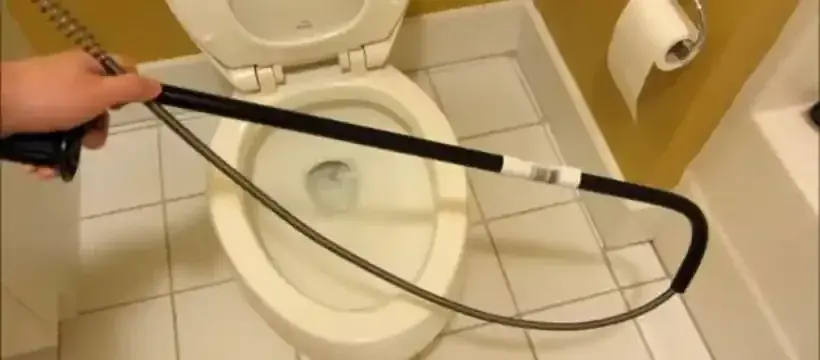
- A wet vacuum or a closet auger can work when you have one.
- Skip chemical cleaners.
- If other drains gurgle or water rises, stop and call.
First, Do Not Flush Again
If the bowl is full, flushing again will overflow it. Turn off the water at the valve behind the toilet, a quarter turn clockwise on the oval handle, so the tank stops refilling. Then use gloves and put towels down.
If the water level is dropping slowly, the clog is partial. Wait a few minutes before trying anything, since it may clear.
Hot Water and Dish Soap
Squirt in dish soap
Add a generous squirt of liquid dish soap into the bowl.
Add hot water
Pour hot tap water from waist height. Not boiling, which can crack porcelain.
Wait
Let it sit for 15 to 20 minutes.
Flush gently
If the level drops, flush once to test.
The soap lubricates the clog, and the hot water softens paper and waste. This works on many partial clogs.
Other Tools You May Have
| Tool | How to use it | Caution |
|---|---|---|
| Wire hanger, straightened | Hook the end, push gently into the trap | Wrap the end in a cloth to avoid scratching |
| Wet and dry vacuum | Seal the hose to the drain and suction | Use on liquid only, and clean it well after |
| Pressure from a bucket | Pour a bucket of water into the bowl quickly | Do it from waist height, not above the rim |
| A closet auger | Crank into the trap and pull out the clog | The right tool, usually under a plumber's kit |
Skip chemical drain cleaners. They are hazardous and rarely clear a toilet, and they make the next repair riskier.
Why Toilets Clog in the First Place
Too much paper, flushable wipes and small objects are the usual causes. Older toilets with weak flushes clog more often. If a toilet clogs repeatedly, the trap, the vent or the sewer line may be partly blocked.
If the toilet clogs and a nearby tub gurgles, the clog is past the toilet. See drain cleaning and stop using water.
When to Stop and Call
Call if the water rises when you try anything, if other fixtures back up or if sewage appears in a floor drain. A repeat clog points to a deeper problem. Our emergency line is open 24/7, and the toilet repair page explains what a visit involves.
If the problem is the sewer line, sewer line cleaning is the next step.
What a Plunger Does Better
A flange plunger seals the drain and pushes water back and forth to move the clog. It works on most blockages in a few strokes. If you buy one, choose a flange style and not the flat cup meant for sinks.
Keep it in the bathroom, since the moment you need it is the moment you do not want to look for it.
Signs the Toilet Is Not the Real Problem
If the tub gurgles when you flush, if a basement floor drain smells or if several toilets are slow, the clog is further down. Using more water makes it worse.
Stop flushing and call. A cable machine or a camera finds the clog quickly.
A Few Things Not to Do
Do not add chemicals. Do not use a metal tool that can scratch porcelain. Do not keep flushing hoping it will clear. Do not use boiling water.
Do not ignore a toilet that clogs repeatedly, either. The cause is usually something small now and something bigger later.
If Someone Flushed an Object
Toys, brushes and other objects can lodge in the trap. If the toilet clogs after something went in, do not force it. A closet auger or a toilet pull-up lets a plumber retrieve it without cracking the bowl.
Tell us what went in and when. That helps us choose the right tool.
Preventing the Next Clog
Flush only toilet paper and human waste. Keep a plunger in the bathroom, because a plunger solves most clogs faster than any trick. Check the flapper and the water level in the tank if flushes feel weak.
We help homeowners in Maple Shade and in Mount Laurel and Moorestown with toilets that keep clogging.
Common Questions
No. Boiling water can crack porcelain. Use hot tap water.
Yes. It lubricates the clog and rinses away.
A weak flush, a partial blockage in the trap or a sewer line problem can cause it.
They tend to survive in the pipe. Throw them in the trash.
Usually the landlord. Almost half of the township's households own, so rentals are common.
Give it 15 to 20 minutes. If the level drops, flush once gently to test. If nothing changes, try another method or stop and call. Repeating the same step many times rarely helps, and waiting too long with a full bowl risks an overflow.