
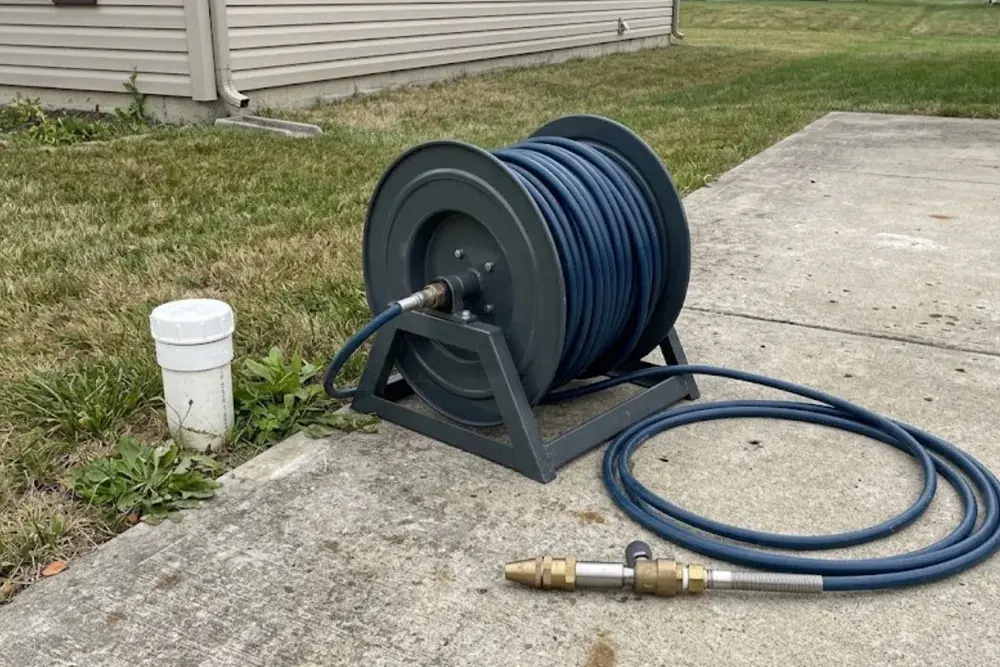
Emergency Sewer Line Cleaning in Maple Shade, NJ
When every drain in the house is slow or sewage is rising in the lowest fixture, the main line is blocked. Call the 24/7 line, and stop using water while a plumber is on the way.
Main Line Backup: Stop the Water, Then Call
A blocked main sewer line is an emergency because nothing you flush or drain has anywhere to go. Our emergency sewer cleaning line in Maple Shade is open 24/7, and we book same-day visits when we can. Stop running water, hold off on laundry and dishes, and keep people away from any floor drain that is overflowing.
If you can find a cleanout, a capped pipe usually near the foundation or in the basement, leave it closed until the plumber is there. Opening one under pressure releases sewage onto the floor.
What Causes a Main Line to Block
Tree roots
Fine roots enter joints and grow into a mat that catches paper and waste.
Grease and wipes
Grease coats the walls, and wipes labeled flushable do not break down.
A sag in the pipe
A low section holds water and solids, a problem a camera shows.
Collapse or offset
A broken pipe stops flow completely and needs repair, not cleaning.
Cleaning removes what is in the pipe. It does not fix the pipe, so if a line blocks again within a few months we recommend a camera pass before a third cleaning.
Cable Machine, Jetting or Both
| Tool | What it does | When we choose it |
|---|---|---|
| Cable machine | Cuts through roots and breaks up soft clogs | First choice for roots and a fully blocked line |
| Hydro jetter | Scours the pipe wall with high-pressure water | Grease, scale or a coated line, see hydro jetting |
| Camera | Shows the pipe before and after | To confirm the cleaning worked or find a defect |
Many jobs use two tools. A cable opens a path, and a jetter then washes the walls so the clog does not rebuild quickly.
Sewer Line Cleaning problem right now?
Call the 24/7 line. We book the next available visit and tell you what to do while you wait.
Sewer Cleaning in Maple Shade
Maple Shade's 2006 master plan records a 1988 sewer-connection moratorium and describes large multifamily construction between 1960 and 1980. Older laterals and larger buildings mean main-line cleanouts are worth locating before you need them. If your building shares a lateral, a backup can start with a neighbor's use.
Properties along the Route 38 and Route 73 corridors include restaurants and shops, where grease interceptors and kitchen lines drive many backups. Our commercial plumbing page covers business-specific work.
We also clean sewer lines in Pennsauken, where older neighborhoods run close to the Route 130 and Route 73 corridors.
After the Line Is Open
Once water flows, we run a camera through the cleaned section to confirm it is clear and look for damage. If we see cracks, roots at joints or a belly, we show you the footage and discuss repair choices. You are never obliged to repair anything the same day.
To keep the line open, avoid pouring grease down the drain, skip flushable wipes and keep tree roots in mind when planting near the line. An annual camera check or cleaning is reasonable for a line with a history of roots.
Keeping a Cleaned Line Clear
Cleaning is not a permanent fix if the cause stays. Grease poured down kitchen drains, wipes labeled flushable and roots entering joints bring the clog back. Cleanouts that are easy to reach make future cleaning cheaper.
If you know your line has roots, ask about a yearly cleaning schedule. A scheduled visit costs less than an emergency visit and keeps your plans intact.
What Affects the Price
Common Questions
Yes. The line is open 24/7, and a sewage backup is treated as urgent.
If several fixtures are slow or a basement floor drain backs up when you run water upstairs, the main is the likely problem.
No. Cleaning clears the pipe but does not repair it. A camera shows whether the pipe needs repair.
You are generally responsible for the lateral from the house to the public main. A camera shows where the blockage sits.
They tend to survive in the pipe and catch on roots. Only toilet paper should go down.
Only when there is a reason. Lines with roots may need a yearly check.