
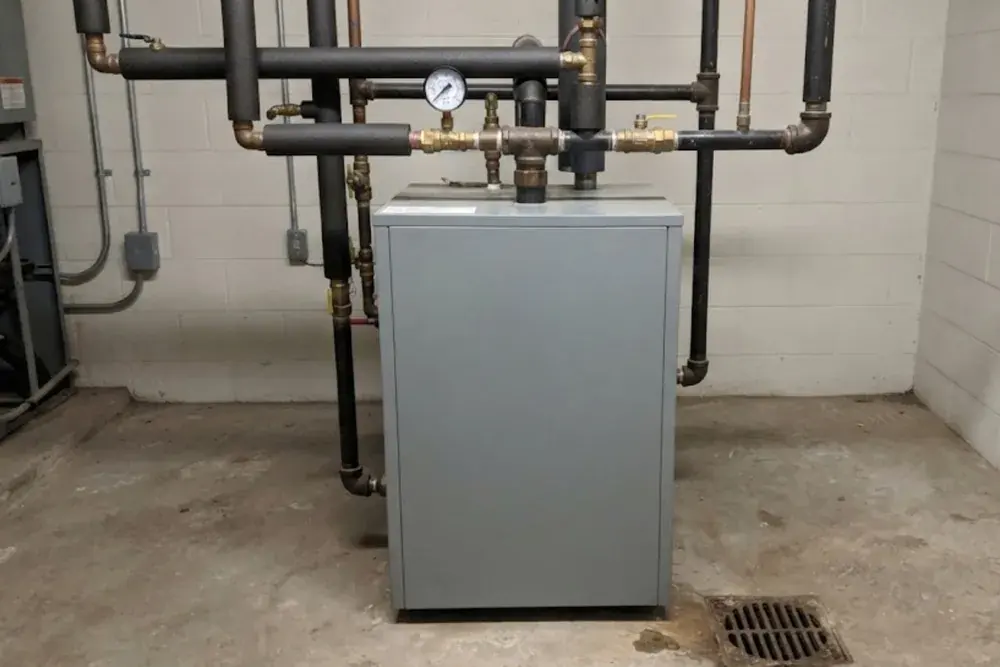
Boiler Repair in Maple Shade, NJ
A hydronic boiler that has gone cold, leaks or knocks needs a plumber who understands the piping around it. We diagnose and repair the water side of your heating system.
What We Repair on a Boiler
A hydronic boiler heats water and circulates it through radiators or baseboards. We repair the plumbing side of that system, including leaks, circulator pumps, expansion tanks, relief valves, zone valves and air in the lines. Burner and combustion work follows its own safety rules, and we tell you when a heating specialist is needed.
| Symptom | Likely cause |
|---|---|
| Cold radiators | Air in the lines or a failed circulator |
| Banging or knocking | Air or low water |
| Water at the boiler | Relief valve, fitting or a failed vessel |
| Pressure too high or too low | Expansion tank or auto-fill valve |
| Heat in some zones only | Zone valve or thermostat fault |
First Checks Before You Call
Check the gauge
Normal cold pressure is often around 12 to 15 psi, but check the label.
Bleed a radiator
Let trapped air out until water appears.
Look for water
Dry, then watch for the first drop.
Note the sounds
Banging, hissing or silence tell us a lot.
If you smell gas or see soot or flame where it does not belong, leave the building and call the gas utility or 911 first.
Leaks Are the Priority
A boiler leak is a plumbing problem and a safety one. Water on the floor can come from a fitting, a relief valve or the boiler body. Fittings are fixable. A leaking heat exchanger or vessel usually means replacement.
Shut off the water feed and the power to the boiler if it is safe to do so. A cold house is uncomfortable, but a leaking one needs the leak stopped first.
Boilers in Maple Shade Buildings
Maple Shade's large multifamily buildings, built mostly between 1960 and 1980 according to the 2006 master plan, often have central boilers with baseboards or radiators. Aging circulators, zone valves and expansion tanks are the common failures there. Property managers should schedule a check before the heating season.
We cover Maple Shade and neighbors such as Cinnaminson and Moorestown, where older homes still run on hydronic heat.
Maintenance That Prevents Failures
Bleed radiators each fall, check the pressure gauge monthly in winter and look for stains at joints. Have the system checked before the season, not during the first cold snap. A small leak found early is a cheap repair.
Related plumbing issues often appear together. A frozen line or a failing valve can look like a boiler problem. See burst pipe repair if water is escaping.
Reading the Pressure Gauge and Controls
A boiler gauge shows pressure, and many also show temperature. Pressure that creeps up and the relief valve discharging points to a failing expansion tank. Pressure that falls and the system losing water points to a leak or a failed fill valve.
We recommend that you note the normal reading when the system is cold and working. A change from normal tells us where to look, and it makes your description on the phone much more useful.
Scheduling Work Around the Heating Season
Repairs in October are easier than in January. Parts are in stock, schedules are open and a cold house is not an emergency. If you manage a building, treat late summer as the time to inspect circulators, zone valves and expansion tanks.
If the boiler fails in winter, call the 24/7 line anyway. We try to find a same-day appointment when the schedule allows, and we can advise on temporary steps to protect pipes from freezing.
What Affects the Price
Common Questions
We repair the plumbing side, such as leaks, circulators, valves and air. Burner and combustion work may need a heating specialist.
Air in the lines, a failed circulator or a closed zone valve are common causes.
A fitting or relief valve is often the cause. A leaking boiler body usually means replacement.
Open the small valve with a radiator key until water appears, then close it.
Leave the building and call the gas utility or 911 before you call us.
Before the heating season starts, not after it fails.