
The Short Answer
Key points
- A pump swap takes hours, a new pit about a day and an interior drain system several days.
- Exterior excavation takes a week or more and depends on the weather.
- Find the water source first, because the fix and the time depend on it.
- Ask for a written scope, schedule and rain plan.
- Plumbers handle pumps, pits, drains and pipes, and other trades handle walls and excavation.
Timelines by Type of Fix
| Fix | Typical time | What decides it |
|---|---|---|
| Pump replacement | A few hours | Pit condition and discharge line |
| Downspout and grading changes | A day or less | Length of runs and soil |
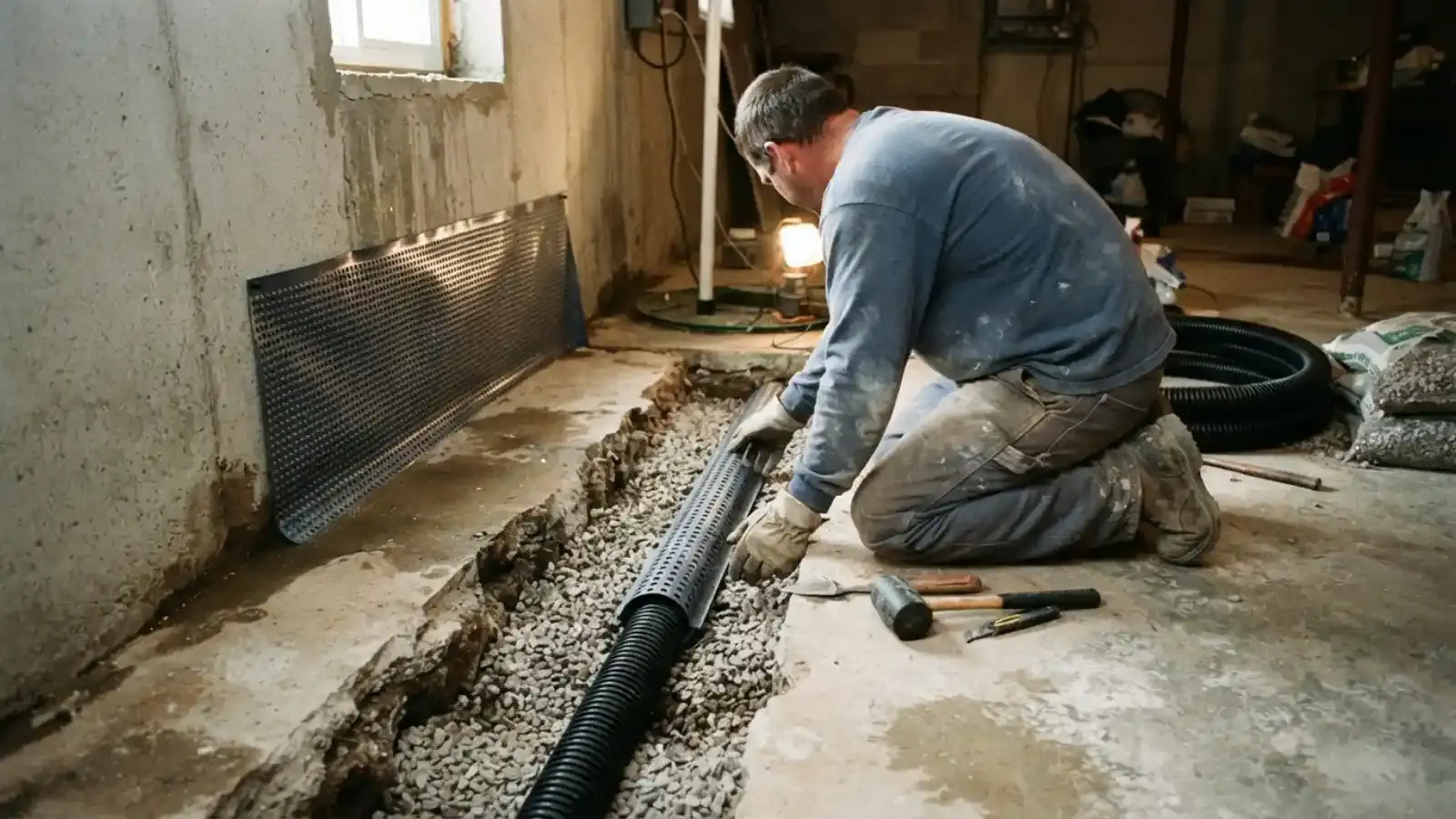
| New sump pit and pump | About a day | Slab cutting and drain connection |
| Interior drain system | Several days | Length of wall, floor finish, concrete cure |
| Exterior membrane and excavation | A week or more | Depth, access, weather and restoration |
These are rough ranges and not promises. A contractor who quotes a firm timeline before seeing the basement is guessing.
Find the Source Before the Schedule
A wet basement can be a pipe leak, a sewer backup, groundwater through the walls or surface water from a downspout. The fix and the time depend entirely on which it is. We check the plumbing sources first, with the meter test and a camera if needed.
A leaking pipe may be fixed in a day. Groundwater through the wall is a different trade and a longer job. See leak detection for the plumbing checks.
What Slows a Project Down
- Weather, since excavation and concrete need dry days
- Permits and inspections where required
- Finished basements that need protecting or demolition
- Access for equipment
- Waiting for materials or for concrete to cure
Ask for the schedule in writing, and ask what the plan is if rain delays the work.
What We Handle and What We Do Not
We handle the plumbing side: sump pits, pumps, discharge lines, interior drain connections, leaking pipes and backups. We do not repair foundation cracks or do exterior excavation. We tell you which part of a plan belongs to us.
Our basement waterproofing page explains our scope, and sump pump repair covers pumps.
Preparing the Basement
Clear the floor and walls so crews have access. Move valuables upstairs, and take photos before work starts. If the basement is finished, ask how carpet, drywall and trim will be protected or restored.
We work in Maple Shade and in Pennsauken and Cherry Hill basements near creeks and low ground.
Questions to Ask Any Contractor
Ask what the plan is for the water source, who is responsible for permits, how the schedule changes if it rains and what the warranty covers. Ask to see a written scope and a timeline.
A contractor who cannot name the source of your water is selling a product, not a solution.
Checking the Work After a Storm
After the first heavy rain, check the pit, the pump and the walls. Note any damp spots and report them early. A fix that is not tested by weather has not really been tested.
If the water returns, call quickly while the problem is fresh and the contractor can see it.
A Realistic Order of Operations
Start with the cheapest steps and work up. First clear gutters, extend downspouts and check grading. Second, confirm that no pipe is leaking and that the floor drain works. Third, test the sump pump and replace it if it is weak.
Only after those three should anyone talk about interior drains or exterior excavation. Many basements improve after the first step, and a contractor who skips it is selling the biggest job first.
Each step has its own time, and the total depends on how many you need. That is why a quote should list steps and not a single lump.
What You Can Do While You Wait
Raise stored items off the floor on shelves or pallets. Run a dehumidifier to keep humidity down and mold away. Keep a wet vacuum on hand and know where the sump pump outlet and the main shutoff are.
If water enters during the work, tell the contractor and photograph it. The photo shows exactly where it came in, which helps the next step.
Safety Checklist While the Basement Is Wet
- Stay out of standing water if outlets, the panel or extension cords may be wet, and call an electrician or the utility
- Do not run a wet vacuum or use a pump on a cord near standing water unless it is plugged into a GFCI outlet that stays dry
- Shut off the water at the main if a pipe is the source
- Keep children and pets out until the floor is dry and slip risk is gone
- Do not mix cleaning chemicals, and ventilate the room if you use any
- Photograph the damage before moving anything, for your own records
If you smell gas, leave the house and call 911 from outside. Water near a gas appliance such as a boiler or water heater is a reason to stop and call for help.
Common Questions
It handles water collected in a pit. It does not fix wall seepage or leaking pipes.
Often a few hours.
Partly. The pump, pit, drains and pipes are plumbing. Wall sealing and excavation are other trades.
Groundwater, downspouts and grading are the usual causes.
The township plan calls for storm drainage control and flood plain regulation, so ask the township about your street.
Start with a plumber if you suspect a leaking pipe, a sewer backup or a failed pump, since those are fast to confirm and fix. If the plumbing checks out and water still enters through walls, a waterproofing contractor is the next call. A clear diagnosis keeps you from paying for the wrong job.