
The Short Answer
Key points
- A good report lists pipe material, length inspected and each finding with its distance from the cleanout.
- Roots, bellies, offsets, cracks, scale and collapse are the main findings, and each has a typical response.
- Ask for the video and not only the notes.
- Find out whether each defect is on your lateral or on the public main.
- Not every finding is urgent, and a plan beats a panic.
What the Report Includes
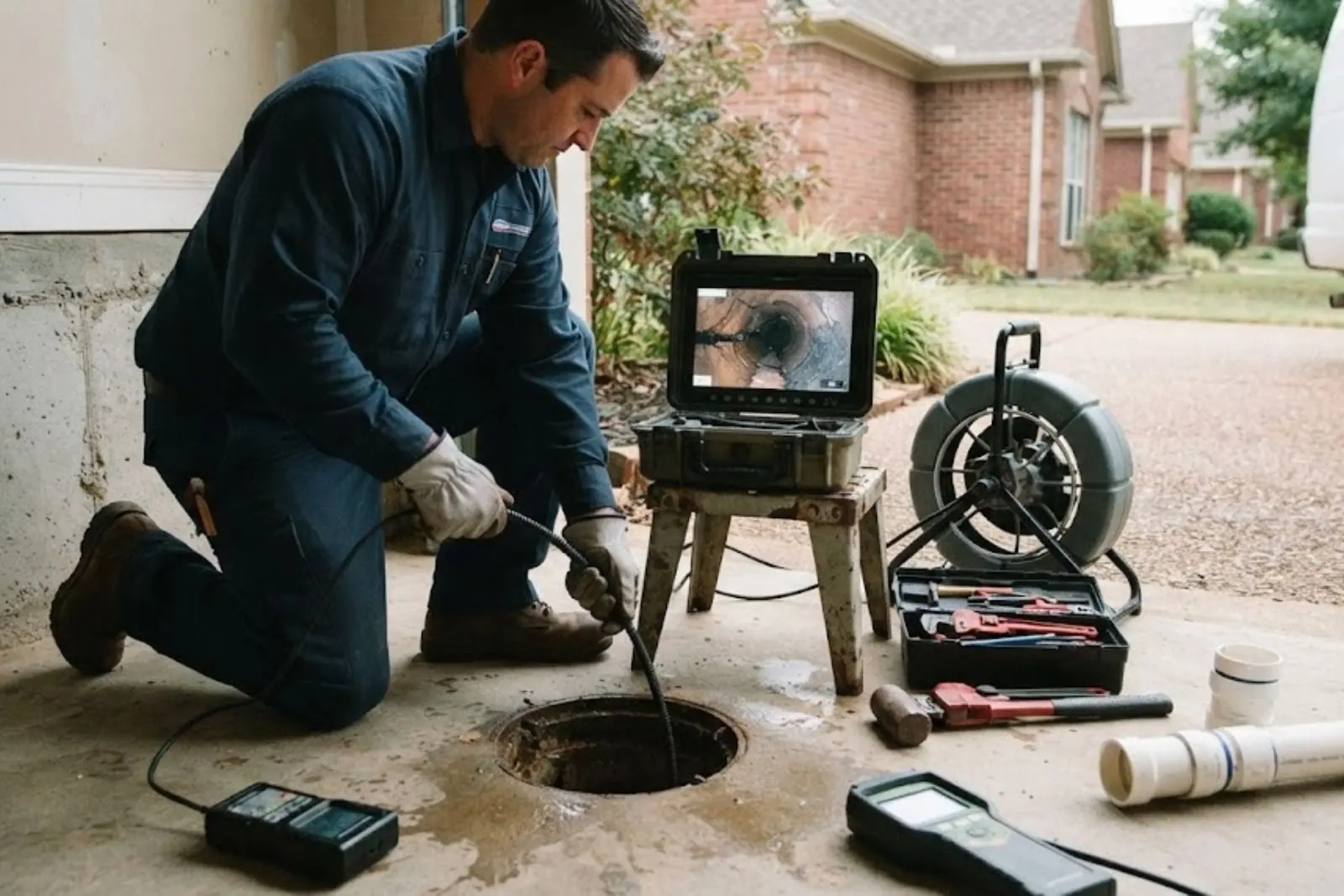
A good report lists the date, the address, the pipe material and the length inspected. It includes a video file and notes on each finding with its distance from the cleanout. Photos or stills of defects are common.
Ask for the video, not just the notes. A defect described as minor in writing may look different on screen, and the video is what you share with a buyer or a contractor.
The Findings You Will See
| Finding | What it means | Typical response |
|---|---|---|
| Roots | Roots entering a joint or crack | Cut out roots, consider lining or repair |
| Belly or sag | A low spot holding water | Monitor, or dig to correct if severe |
| Offset joint | Pipe sections out of line | Repair if it catches debris or lets in soil |
| Crack or fracture | A break in the pipe wall | Repair or line the section |
| Scale or grease | Buildup narrowing the pipe | Clean or jet, see hydro jetting |
| Collapse | The pipe has failed | Dig and replace the section |
Not every finding needs action now. A small offset with free-flowing water can be left alone and watched. A crack with roots or a belly that holds waste deserves attention.
Questions to Ask the Inspector
- How far from the cleanout is each defect?
- Is the defect on my lateral or on the public main?
- What is the pipe material, and how old is it likely to be?
- Is it urgent, or can it wait for a planned repair?
- Can I see the footage at each marked point?
Those five questions turn a report into a plan. If the answer to the second is the public main, the township or its authority fixes it, and you only need to document it.
After You Read It
If the report is clean, keep the video with your home records. If it shows damage, get a written price for the repair before you commit. Options range from cleaning to lining to excavation, covered on our sewer line repair page.
When you are buying a home, a report with defects can support a request for a credit or repair. Your agent or attorney can use the footage. We inspect in Maple Shade and in Pennsauken and Moorestown.
What a Clean Report Looks Like
A clean report shows a continuous pipe, tight joints, no roots and free flow. Even then, note the pipe material. Clay and cast iron have a finite life, and a clean report today is not a promise for the next twenty years.
Keep the video, the date and the notes with your home records. A second inspection years later shows whether anything has changed.
Costs, Timing and Who Pays
An inspection is a planned service with a clear price, and repairs are priced separately. In a sale, buyers or sellers may share the cost by agreement.
If a defect is found in the lateral, the owner of the property is generally responsible. If it is in the public main, the township or its authority is.
Using the Report in a Home Sale
Buyers often ask for a sewer inspection in an older home, and sellers sometimes order one ahead of time. A clean report builds confidence. A report with defects opens a negotiation, and having the numbers ready makes it easier.
Your agent or attorney decides how to handle the findings. We provide the footage and a plain explanation.
Maintenance After the Report
If roots were found, ask about a yearly cleaning schedule. If grease was found, change habits and consider jetting. If the pipe is sound, note when it was inspected and plan another look in a few years.
Whatever the findings, keep the footage. It is the best baseline you will have.
A Camera Does Not See Everything
A camera shows the inside of the pipe it can reach. It cannot see past a full blockage or through a bad bend. A very small leak may not be visible, and a pipe can look fine and still be at the end of its life.
That is why we pair the camera with the history of the pipe and the symptoms you have had. See sewer inspection for what a visit includes.
Common Questions
Often under an hour, longer for long or blocked lines.
Ask for it. It is the best record of the pipe's condition.
The township or its sewer authority is generally responsible for the main in the street.
It can find cracks and breaks that may leak. Not every leak is visible.
The 2006 plan notes a 1988 moratorium on new sewer connections, a sign the system has had capacity concerns.