
Sump Pump Repair: What to Check Before You Call a Plumber
A sump pump that fails in a storm gives you about as much time as the rain allows. These checks take ten minutes and tell you whether you have a quick fix or a replacement.
The Short Answer
Key points
- Check the outlet, the breaker and the float before anything else, since most failures are simple.
- A pump that runs but moves little water may have a clogged intake or a frozen discharge line.
- A failed check valve makes the pump cycle again seconds after it stops.
- A pump near 7 to 10 years old with a dead motor is usually cheaper to replace than repair.
- Call right away if the pit is filling during a storm and the pump will not start.
Start With Power and the Float
Most sump pump failures turn out to be simple. Check that the pump is plugged into a working outlet, since many pumps share a circuit with a ground-fault protection device that trips in wet conditions. Press the reset button on the outlet if there is one, and check the breaker.
Next, look at the float. It is the arm or ball that rises with the water and tells the pump to start. Lift it by hand. If the pump starts, the float was stuck or tangled against the pit wall. If nothing happens, the switch or the motor is the likely fault.
Look for a Clog or a Frozen Line
A pump that runs but moves little water may have a clogged intake screen or a blocked discharge line. Unplug the pump before you touch it, then lift it out of the pit enough to see the screen on the bottom. Silt and gravel collect there.
In winter, check where the discharge line leaves the house. Ice at the end of the pipe blocks the outflow, and the pump keeps working against a plug. A bit of warm water at the exit often clears it, and a splash block or a longer line keeps it from freezing again.
The Check Valve and the Sound It Makes
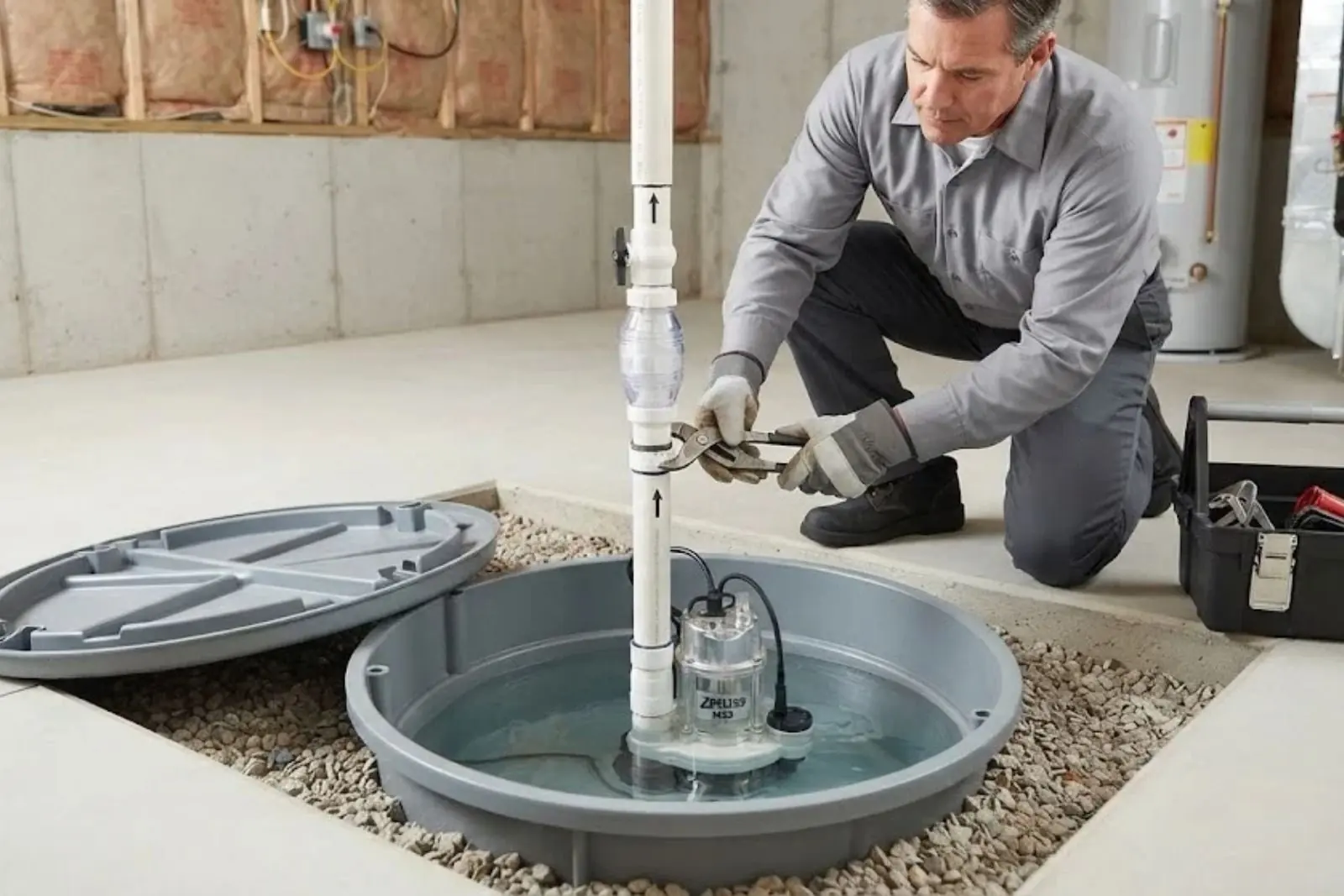
The check valve sits on the discharge pipe above the pump and stops water from flowing back into the pit. When it fails, the pump empties the pit, then the pipe drains back, and the pump starts again within seconds. You hear the cycle repeat over and over.
| What you hear or see | Likely cause | Next step |
|---|---|---|
| Pump never starts | Power, float or dead motor | Test outlet and float, then replace if dead |
| Pump hums, no pumping | Jammed impeller or stuck motor | Clean intake, otherwise replace |
| Pump runs nonstop | Stuck float or a very high water table | Free the float and check the source of water |
| Pump starts again after each cycle | Failed check valve | Replace the valve |
| Loud rattling | Debris or worn bearings | Clean, and plan replacement |
When Repair Is Not Worth It
Most sump pumps last roughly 7 to 10 years. A pump near that age with a burned-out motor is usually cheaper to replace than to repair, and a new pump brings a new warranty. If the pit is cracked, too small or full of silt, replace or reset it at the same time.
A battery backup is worth considering if your basement has flooded during an outage. It adds a second pump and a battery that runs it for a limited time. Our sump pump repair page covers pump types and what a replacement visit involves.
Where the Water Goes Matters
A pump only helps if the water ends up somewhere useful. A discharge pipe that empties next to the foundation sends the water straight back to the pit. Extend it several feet away and slope the ground so the water drains away.
Never connect a sump discharge to the sanitary sewer. It is generally not allowed, and it can overload the sewer during storms. If you are not sure where yours goes, a plumber can trace the line.
A Quick Maintenance Routine
Twice a year, clear the pit of silt and debris, wipe the float, and check that the pump sits level on a firm base. Pour water in and watch the full cycle, from float lift to the pump shutting off. Listen for grinding or rattling, which warns of worn bearings.
Keep the pump and its cord out of any standing water above the outlet, and mount the outlet high on the wall. A clear record of the date and what you found makes the next call faster.
When to Call Right Away
Call if water is rising in the pit and the pump is dead, if the pump runs continuously for hours or if you see water coming through the floor or walls. Move belongings off the floor, and stay out of the basement if outlets or the panel may be wet. We serve Cinnaminson and Cherry Hill as well as Maple Shade, including basements near creeks.
If the cause is not the pump, basement waterproofing explains what plumbers can and cannot fix.
Common Questions
The float may be stuck, or the water table may be high after heavy rain. If it runs in dry weather, a leaking pipe could be feeding the pit.
A few times a year, and before storms. Pour a bucket of water into the pit and watch the float lift.
Simple things like freeing a float or cleaning the intake are fine. Always unplug the pump first, and call a plumber for electrical or discharge problems.
The township's master plan calls for storm drainage control and flood plain regulation, so ask the township about low areas near your street.
It depends on the pump, the pit and the discharge line. We give a clear price before work starts.