
The Short Answer
Key points
- The gas line and meter are the first thing to check, since a tankless unit draws far more gas than a tank.
- Condensing units vent through plastic pipe and need a condensate drain.
- Size the unit by peak simultaneous use, not by the size of the house.
- Plan on periodic descaling, with the interval based on your water.
- Ask for a written scope that covers the gas line, vent, drain and permit.
Gas Line Size Is the First Question
A tankless gas heater burns a large amount of gas in a short time, far more than a tank burner. The existing gas pipe and meter may not be able to deliver it. Installers calculate the total load of all gas appliances and compare it to what the line can supply.
If the pipe is too small, it has to be replaced with a larger one, and sometimes the utility must upgrade the meter. That is why the survey comes before the quote, and why a price given sight unseen means little.
Venting and Combustion Air
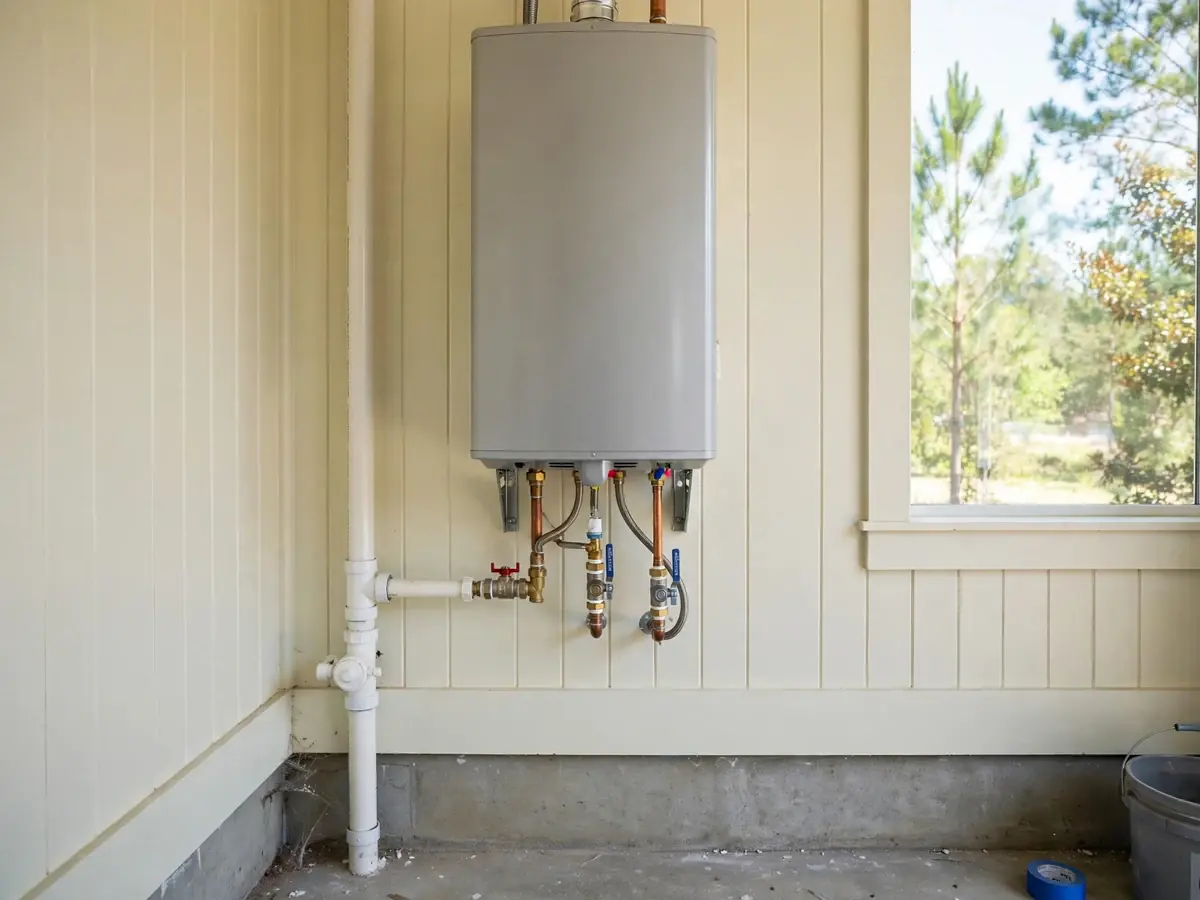
High-efficiency tankless units are condensing. They pull exhaust heat out so efficiently that the exhaust is cool enough to vent through plastic pipe, usually out a side wall. That is often easier than a chimney, but the run length, the termination point and clearances from windows and meters all have rules.
Condensing units also produce acidic condensate, which needs a drain and sometimes a neutralizer. Without a nearby drain, a small pump may be needed.
Flow Rate and Sizing
| Use | Approximate flow |
|---|---|
| Bathroom sink | Low |
| Showerhead | Medium |
| Dishwasher or washer | Medium |
| Tub fill | High |
Add up what runs at the same time. Two showers and a dishwasher together may exceed what one unit can heat. Sizing by peak use, not by house size, is what prevents lukewarm showers.
Maintenance That Protects the Investment
Tankless units need periodic descaling, and a clean inlet filter keeps flow steady. The interval depends on your water. Maple Shade Utilities does not report a hardness figure in its 2024 water quality report, so test your tap and ask us how often to flush.
Keep a record of service. Many manufacturers require it for warranty claims. See our page on the tankless water heater service for flush and repair details.
Questions to Ask Before You Buy
Ask the installer to calculate the total gas load, show you the vent path on paper and name the condensate plan. Ask what the maintenance schedule will be and what the warranty requires you to do.
If any of those questions gets a vague answer, wait. A tankless installation is mostly planning, and the equipment is the easy part.
Comparing the Total Cost With a Tank
A tankless unit often costs more to buy and install, and its savings come from lower standby losses and a longer life. The break-even depends on your usage and on how much gas and electrical work the conversion needs.
Compare quotes on the whole scope, including the gas line, the vent, the drain and the permit, not just the unit.
What to Expect on Installation Day
The installer shuts off the water and gas, removes or works around the old tank, mounts the new unit and runs the vent and gas line. The condensate drain and the isolation valves go in, and the unit is tested and programmed.
Expect the work to take most of a day, and for water and gas to be off for part of it. Plan meals and showers accordingly.
After the Install
Learn where the isolation valves and the inlet filter are. Write down the model and serial number and set a reminder for the first flush. Test hot water at the farthest fixture to confirm the flow.
A tankless unit that is looked after runs for many years. One that is ignored shows scale and error codes sooner than it should.
Is Tankless Right for Your House?
Tankless is a good fit for households that run out of hot water with a tank, or for tight spaces. It is a weaker fit when the gas line is far undersized or the budget is tight. A tank is still a good choice in many homes.
We install and service in Maple Shade and in Cherry Hill and Moorestown. A planned conversion is a good time to ask us about water heater installation options as well.
Common Questions
Often yes. The heater draws far more gas than a tank, so the line and sometimes the meter must be checked.
Many condensing units vent through plastic pipe out a side wall. Rules govern length and clearances.
Condensing units create acidic water that needs a drain, often with a neutralizer.
The township's 2024 water quality report does not give a hardness figure. A test strip at your tap is the best guide.
Many makers suggest yearly. The interval depends on your water and the manual for your model.