
The Short Answer
Key points
- Cost follows house size, pipe material, access, permits and patching, not a single flat figure.
- Open basements and crawlspaces cost less to work in than finished rooms and slabs.
- Compare quotes on the same scope, material and inclusions.
- A repair is better when only one section has failed.
- Ask whether drywall patching and permits are in the price.
Size and Layout of the House
More bathrooms, kitchens and laundry rooms mean more runs of pipe. A two-story house with plumbing on both floors is usually more work than a ranch with everything on one slab or basement ceiling. The distance from the main shutoff to the farthest fixture also matters.
A plumber counts fixtures and measures runs, and that count is the base of an honest quote. Be cautious of a price given without seeing the house.
Pipe Material
| Material | Cost pattern | Practical note |
|---|---|---|
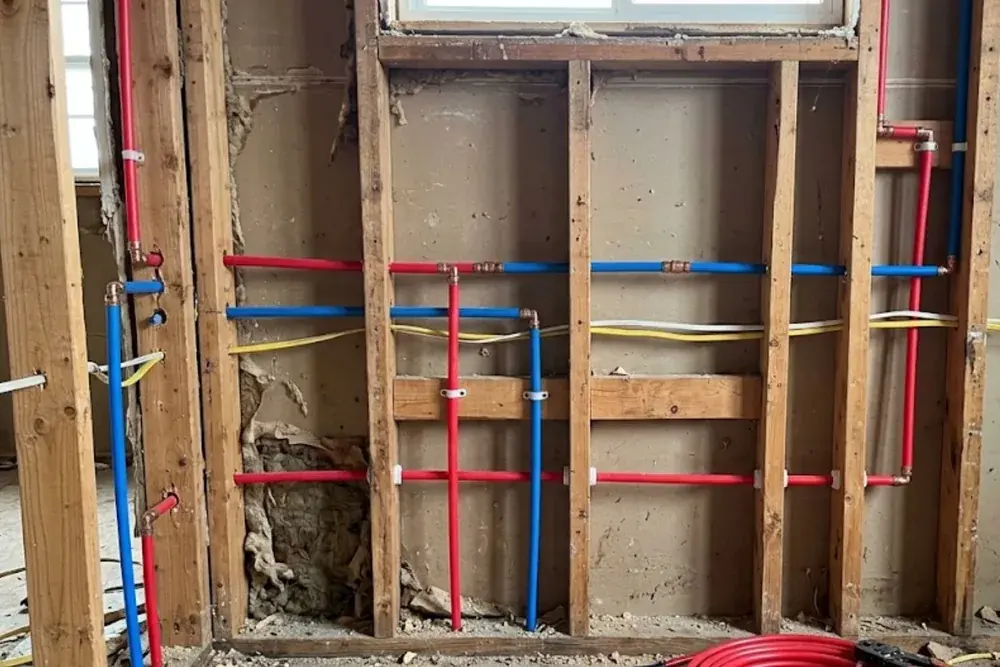
| PEX | Often the lower material and labor cost | Flexible, fewer fittings, good in tight spaces |
| Copper | Higher material and labor | Long track record, rigid, needs soldering |
| CPVC | Lower material cost | Less common now, more brittle with age |
The best choice is not always the cheapest. We explain why we recommend a material for your home and what the code allows.
Access: Open Walls Versus Finished Rooms
Open basements and crawlspaces make a repipe quicker. Finished ceilings and plaster walls mean more openings and more patching. Slab homes are the hardest, because lines under the floor are difficult to reach and may be rerouted overhead.
Patching drywall and repainting are often separate from the plumbing price. Ask whether they are included, and who does them.
Permits, Inspections and Code Upgrades
A repipe may require a permit, and an inspection follows. Rules vary by job, so ask the Maple Shade Construction Office at 200 Stiles Avenue. A repipe is also the time to add missing shutoffs, a pressure reducing valve or an expansion tank if the system needs one.
Those additions are small compared to the whole job, and they prevent the next problem. They are part of a thorough plan and not an upsell.
Repipe or Repair? A Fair Comparison
If one section has failed, repair it. If leaks keep returning, the cost of repeated calls and wall repairs can pass the cost of a repipe. Use our leak detection service to see how widespread the problem is before you decide.
Whatever you choose, compare quotes on scope as well as price. A lower price that leaves out patching or permits is not lower.
Timing and Disruption Are Part of the Cost
A repipe may take a household out of the kitchen and bathrooms for a few days. Ask whether the schedule allows for water in the evenings, and what happens if the work runs long.
For a rental, the cost of lost use can matter as much as the plumbing price. Planning around it keeps the project smooth.
Signs You Are Not Ready for a Repipe
If a single pipe has failed and the rest tests fine, a repair is better. If the water is clear and the pressure is good, you may have years left. A camera, a pressure test and a look at exposed pipe tell you more than guesswork.
We would rather say a repipe is not needed than sell one.
Money-Saving Steps That Are Real
Clear the work areas, make sure access to the basement or attic is open and decide on fixtures before the work starts. Handle drywall patching and painting with your own contractor if you prefer, and ask us to leave openings clean.
Bundling a repipe with a bathroom remodel avoids opening walls twice. A single plan is cheaper than two.
A Note on Financing and Timing
Many homeowners plan a repipe around a remodel, a sale or a string of leaks. Ask your insurer and lender about options if the project is large.
We give a clear price before work starts so you can compare, finance and schedule with confidence.
How to Compare Quotes
- Same scope, whole house or partial
- Same material, with the brand named
- Permits and inspections included or not
- Drywall patching included or not
- Timeline and water-off schedule
We give a clear price before work starts, and we are glad to explain each line. Homes in Cherry Hill and Pennsauken often have a similar story, and the same questions apply.
Common Questions
Many take a few days, depending on size and access.
Worn pipes are usually maintenance. Damage from a sudden failure may be covered. Ask your insurer.
Each has strengths. PEX is flexible and quicker to install. Copper has a long record.
Usually yes, with planned water shutdowns. We explain the schedule.
Maple Shade built heavily in the 1960s and 1970s, so many original pipes are now past their expected life.
Only a rough idea. A firm price needs a look at the house, the pipe material, the access and the fixture count. We give a clear price before work starts, after we have seen what is actually behind the walls.